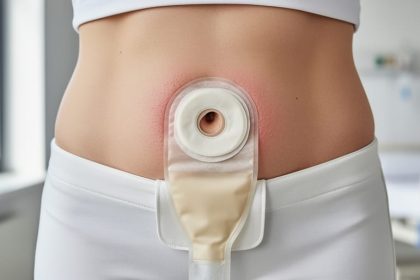
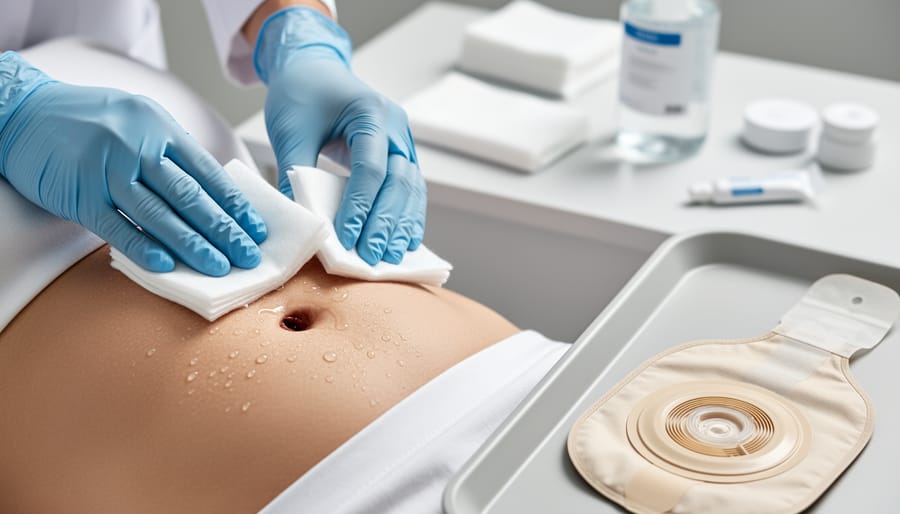
Most peristomal skin irritation clears within 48 to 72 hours once the underlying cause stops. The single most common culprit is leakage of stoma output onto the skin, so the fastest fix is to change the pouching system immediately, clean the affected area with warm water, pat dry completely, and apply a fresh barrier that fits the stoma properly. If you notice raw, weeping skin, severe pain, or signs of infection such as spreading redness or pus, contact your enterostomal therapist or wound care nurse before attempting self-treatment.
Start your assessment by removing the pouching system and inspecting the entire peristomal area. Compare what you see to healthy skin looks like around a stoma: intact, smooth, and the same color as surrounding abdominal skin. Document the location, size, and appearance of any changes. Redness confined to the area where effluent touched skin points to chemical irritation. A symmetric pattern matching the adhesive footprint suggests contact dermatitis. Raised, red bumps with satellite lesions indicate fungal infection. Accurate identification drives every subsequent treatment decision.
This troubleshooting guide walks you through symptom recognition, cause identification, evidence-based treatment protocols, and prevention strategies to restore skin integrity and prevent recurrence. The step-by-step approach applies whether you are an ostomy patient managing your own care, a family caregiver, or a healthcare professional guiding treatment decisions. Early intervention with the correct protocol shortens healing time and reduces the risk of complications that compromise pouching system adherence.
Recognizing Peristomal Skin Irritation: Signs and Symptoms
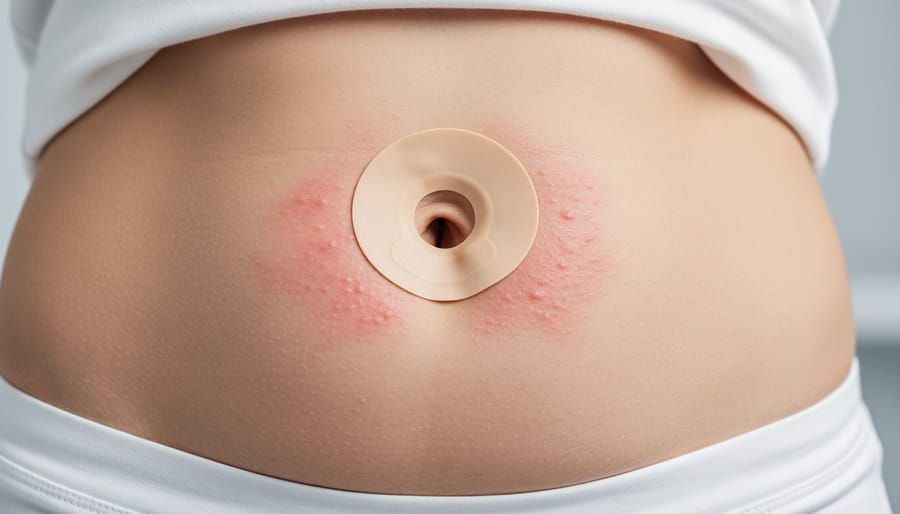
Catching peristomal skin problems early makes treatment simpler and faster. The first step is knowing what you’re looking at. Healthy peristomal skin should match the rest of your abdominal skin in color and texture, remaining intact without visible damage. When irritation develops, it shows up in predictable patterns that signal different underlying causes.
Start by comparing the peristomal area to normal assessment findings documented at your last check-up or to unaffected skin elsewhere on your abdomen. Changes in color, texture, or integrity indicate a problem requiring attention. The severity determines whether you can manage it at home or need professional help.
Mild irritation typically appears as light pink or red discoloration within one to two centimeters of the stoma edge. The skin surface remains unbroken, though it may feel slightly warm or tender to touch. Patients often notice minor itching or burning sensations when applying or removing the pouching system. This stage responds well to early intervention with barrier adjustments.
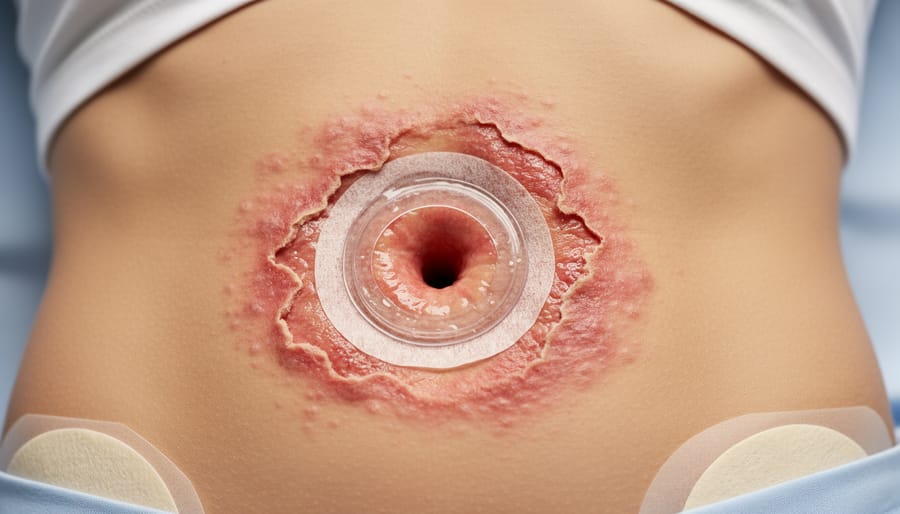
Moderate damage presents with deeper redness extending beyond two centimeters, often accompanied by small erosions or weeping areas where the top layer of skin has worn away. The affected tissue may appear shiny or moist, and pain becomes more pronounced during pouch changes. Papules or small raised bumps suggest an allergic reaction, while pustules point toward infection.
Severe complications demand immediate attention:
- Deep erosions or ulcerations exposing lower skin layers
- Widespread breakdown affecting more than half the peristomal area
- Bleeding from damaged tissue beyond minor oozing
- Purulent drainage with yellow or green discharge
- Dark red or purple discoloration indicating possible tissue death
- Severe pain that interferes with pouching system adhesion
- Foul odor unrelated to normal stoma output
Location matters as much as severity. Damage directly under the barrier edge often stems from leakage or improper sizing, while scattered patches suggest allergic reactions. Symmetrical patterns around the entire stoma perimeter point to mechanical friction or ill-fitting equipment.
Document what you see with photos if possible, noting when symptoms started and any recent changes to products or routines. This information guides treatment decisions and helps healthcare providers assess progression if professional care becomes necessary.
Common Causes of Peristomal Skin Breakdown
Understanding what causes peristomal skin breakdown is essential for effective treatment. Each cause produces distinct patterns during skin assessment, and recognizing these differences guides appropriate intervention. Most breakdowns result from one or more of five primary mechanisms: mechanical trauma, chemical irritation, moisture damage, allergic reactions, and infection.
Mechanical trauma occurs when pouching systems don’t fit properly or when removal technique strips the skin. Signs include irregular areas of denudation, linear tears, or skin loss that corresponds to appliance edges or belt pressure points. The damage typically appears at pouch margins or where convex devices press too firmly against tissue. Unlike chemical irritation, mechanical damage has well-defined borders that match the shape of the offending product.
Chemical irritation from effluent exposure is the most common cause of peristomal breakdown. Stool or urine contains enzymes and acids that digest skin rapidly when barriers fail. This damage presents as bright red, moist erosions in a pattern that follows effluent leakage, often spreading downward from the stoma base or pooling in skin creases. The affected area burns and weeps, and you’ll notice the damage extends beyond the immediate stoma edge. Ileostomy output causes more severe damage than colostomy effluent due to higher enzyme concentration.
Moisture-associated skin damage results from chronic exposure to perspiration, condensation under pouches, or inadequate drying between changes. The skin appears macerated, white or grayish, and may have a soggy texture. This contrasts with chemical burns and helps you compare to normal healthy peristomal tissue. Moisture damage often affects patients in humid climates or those with deep abdominal creases that trap moisture.
Allergic contact dermatitis develops in response to adhesives, skin barriers, or other product components. The reaction creates intensely itchy, raised, red patches with sharp borders that exactly match the contact area, a diagnostic clue. Pustules or vesicles may appear, and the inflammation stops precisely where product contact ends. Some patients develop allergies after years of tolerance to the same products.
Infection, though less common, requires prompt recognition. Fungal infections (most often Candida) produce satellite pustules around a red base and appear in warm, moist folds. Bacterial infections show increasing redness, warmth, purulent drainage, and pain extending beyond the immediate peristomal area.
| Cause | Characteristic Appearance | Key Contributing Factors | Assessment Findings |
|---|---|---|---|
| Mechanical Trauma | Denudation matching appliance edges, linear tears, pressure marks | Improper fit, aggressive removal, excessive belt tension | Well-defined borders, skin loss at contact points, no weeping |
| Chemical Irritation | Bright red, moist erosions following effluent pattern | Barrier failure, ileostomy output, undermining leaks | Burning sensation, irregular borders, progressive spread downward |
| Moisture Damage | Macerated, white-gray tissue with soggy texture | Humidity, perspiration, incomplete drying, deep creases | Softened skin, no sharp borders, no burning |
| Allergic Reaction | Raised, itchy red patches with sharp borders | Adhesive sensitivity, barrier components, product changes | Exact product shape match, possible pustules, intense itching |
| Infection | Satellite pustules (fungal) or purulent drainage (bacterial) | Compromised skin barrier, moisture, immunosuppression | Warmth, spreading redness beyond immediate area, pain, odor |
Multiple causes often overlap. A poorly fitting pouch creates mechanical trauma, which allows effluent leakage that produces chemical burns, which then becomes colonized with yeast. Systematic assessment that examines pattern, location, borders, and symptoms helps untangle combined causes and directs treatment priorities.
Step-by-Step Treatment Protocol
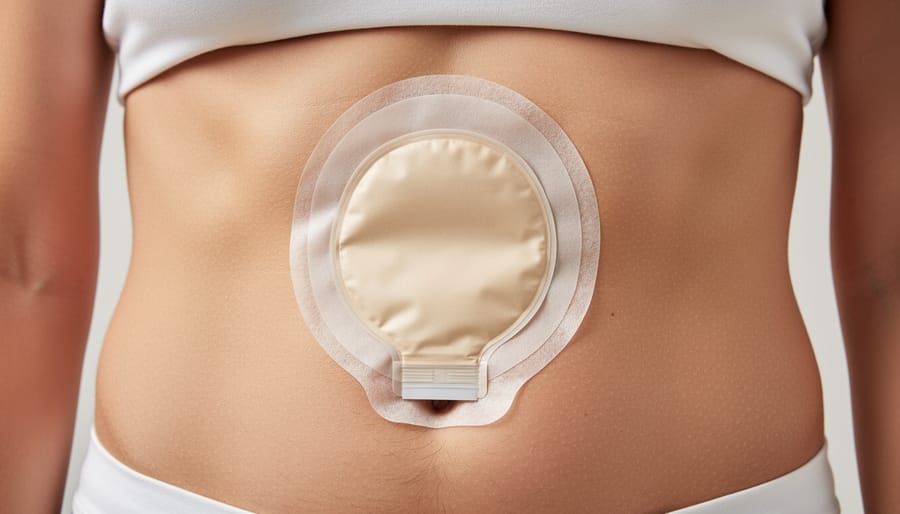
Addressing Mechanical Irritation
Mechanical irritation occurs when friction, pressure, or tension from the pouching system damages the skin around your stoma. This trauma typically appears as abraded patches, linear marks, or localized redness matching the pouch pattern.
Start by verifying your stoma measurements. Stomas shrink during the first 6-8 weeks post-surgery, and seasonal weight changes can alter abdominal contours. The barrier opening should extend 1-2 mm beyond the stoma base, no more. Gaps allow effluent contact; excessive space causes shearing as the pouch shifts.
For recessed or flush stomas, consider convex pouching systems that apply gentle pressure to project the stoma through the barrier opening. Convexity reduces undermining of effluent beneath the barrier edge. Soft convexity suits most patients; firm convexity addresses deeper retraction but requires professional fitting to avoid excessive pressure.
Apply a thin layer of protective powder to abraded areas before placing the barrier. Dust off excess and seal with a liquid skin barrier film. This creates a smooth, healed surface without preventing adhesion.
Check your wearing time. Barriers left beyond their recommended duration lose integrity and create friction points. Most two-piece systems perform optimally for 3-5 days; one-piece systems vary by manufacturer specifications.
Managing Chemical and Moisture Damage
Chemical and moisture damage from effluent exposure requires a layered protection strategy that creates an effective seal while allowing damaged skin to heal. The treatment approach differs based on whether you’re dealing with ileostomy output (highly alkaline and enzymatic) or colostomy output (less caustic but still irritating to compromised skin).
Start by cleansing the area gently with pH-balanced cleanser and patting completely dry. For weeping or eroded areas, apply stoma powder to any moist spots, dust off the excess, and seal with a liquid skin barrier. This creates a dry surface for adhesive contact while protecting the wound bed. You may need to repeat this powder-seal-powder technique in layers for severely denuded areas.
Next, apply barrier paste or strips to fill any creases or uneven areas around the stoma where effluent might track under the barrier. Modern alcohol-free pastes are less stinging and maintain flexibility. Consider switching to a convex pouching system if output is undermining your current flat barrier, convexity creates gentle pressure that helps prevent seepage into skin folds.
For high-output situations causing frequent leakage, you may need to add a barrier ring for extra protection or switch to extended-wear barriers that resist erosion from digestive enzymes. Empty pouches when one-third full to reduce weight pulling on the seal.
Treating Allergic Reactions and Infections
Allergic contact dermatitis typically presents as well-demarcated redness matching the shape of the adhesive product, often accompanied by itching or burning rather than pain. Treatment requires immediate discontinuation of the suspected allergen, usually an adhesive remover, skin barrier, or ostomy tape. Switch to hypoallergenic alternatives and apply a thin layer of barrier film to protect the skin while testing new products systematically, introducing one change at a time to identify the trigger.
Infectious complications manifest as increased warmth, pustules, honey-colored crusting (suggesting bacterial infection), or satellite lesions with white plaques (indicating fungal involvement). Bacterial infections may require topical antiseptics or oral antibiotics if spreading beyond the peristomal area. For suspected fungal infections, antifungal powder applied to dry skin before barrier application typically resolves the issue within several days. When infection is unclear or not responding to initial treatment, obtain a swab wound culture to guide targeted therapy.
Consult a wound care specialist or dermatologist if symptoms worsen despite product changes, you observe tissue necrosis or deep ulceration, or multiple treatment attempts fail within two weeks.
Product Selection and Application Techniques
Selecting the right products for peristomal skin irritation requires matching the barrier system to both the cause of breakdown and the current condition of the skin. A stepped approach works best: address the immediate irritation first, then build protection layers that accommodate healing while maintaining a secure seal.
Start with the foundation. Skin barrier powders (such as karaya or pectin-based formulations) absorb moisture and create a dry surface on weeping or denuded skin. Apply a thin layer to affected areas, dust off excess, then seal with a liquid skin protectant or barrier film. This “crusting” technique fills in irregular surfaces and prevents further maceration. Barrier pastes and strips fill gaps between the stoma and wafer, preventing effluent leakage onto compromised skin, essential when swelling or irregular contours create spaces the standard wafer cannot cover.
- Skin Barrier Powder
- Absorptive agent applied to moist or eroded peristomal skin to create a dry surface for adhesive contact. Used as first layer in crusting technique for weeping dermatitis.
- Barrier Paste
- Alcohol-free moldable formulation that fills gaps between stoma and wafer to prevent effluent undermining. Critical for irregular stomas or when skin is uneven from edema.
- Barrier Film (No-Sting)
- Liquid sealant forming protective coating over intact or broken skin. Seals crusted powder and provides chemical barrier against digestive enzymes without causing stinging sensation.
- Extended-Wear Barrier
- Hydrocolloid wafer designed for 5-7 day wear time, providing longer protection for healing skin. Reduces mechanical trauma from frequent changes but requires careful sizing.
- Convex Barrier
- Curved wafer that applies gentle pressure around stoma to improve seal and reduce leakage. Indicated for retracted or flush stomas causing persistent skin exposure to output.
The barrier wafer itself matters significantly. Extended-wear hydrocolloid barriers minimize change frequency, reducing mechanical trauma during healing. For retracted or flush stomas causing chronic leakage, convex barriers apply gentle pressure to improve stomal protrusion and seal integrity. Choose a pre-cut opening slightly larger than the stoma (approximately 3mm clearance) to accommodate swelling without constricting the stoma or exposing skin to effluent.
Application technique protects healing tissue. Cleanse with warm water only, no soaps or wipes that leave residue or irritate broken skin. Pat dry thoroughly, allowing natural evaporation for two minutes before applying products. Apply barrier powder sparingly to affected areas only, never over healthy skin where it prevents proper adhesive contact. Seal the powder with a thin layer of no-sting barrier film, let it dry completely (usually 30-60 seconds), then apply the wafer using firm, even pressure from the stoma outward. This layering sequence creates a moisture barrier, fills irregular surfaces, and maximizes wear time while the skin heals underneath.
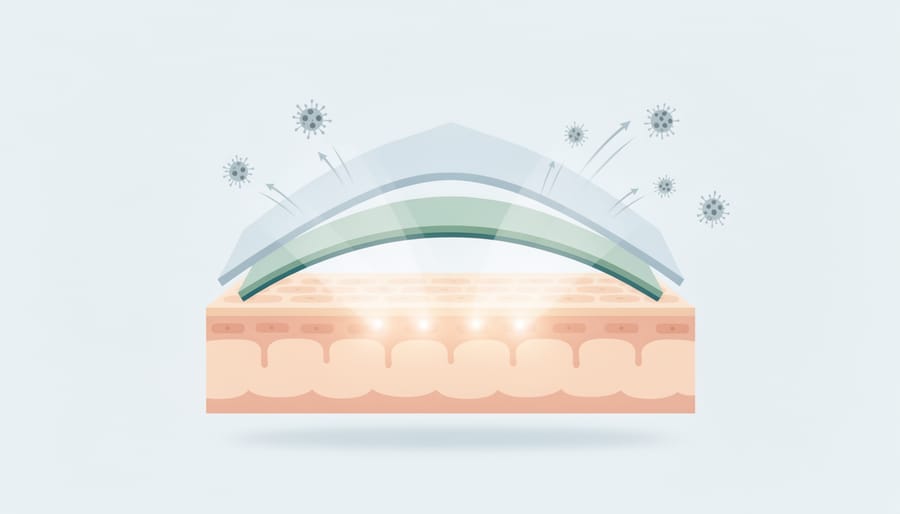
Prevention Strategies for Long-Term Skin Health
Prevention is the most effective treatment for peristomal skin irritation, and it starts with a structured assessment routine. Checking your peristomal skin at every pouch change, ideally every one to two days depending on your pouching system, allows you to catch early signs of redness or texture changes before they progress to erosion or ulceration. Train yourself to look for subtle shifts: increased warmth, mild itching, or small areas of shininess that signal moisture accumulation or adhesive stress. Document what you see, even if it’s normal, a brief note or photo on your phone creates a baseline for comparison.
Proper pouching technique prevents most mechanical and chemical irritation. Measure your stoma at each change during the first six to eight weeks post-surgery, as stoma size decreases during healing, then check monthly. Cut the barrier opening no more than 1/8 inch larger than the stoma’s current diameter to minimize skin exposure to effluent while avoiding constriction. Apply paste or strips to fill creases or dips in your abdomen, creating a level surface that prevents undermining. Warm the barrier wafer between your hands for 30 to 60 seconds before application to enhance adhesion and reduce edge lifting that leads to leakage.
Lifestyle adjustments support skin resilience. Maintain hydration, which keeps skin elastic and less prone to tearing. Avoid harsh soaps, alcohol-based products, and scrubbing, gentle cleansing with warm water and patting dry protects the skin’s moisture barrier. Rotate barrier brands if you develop sensitivity, and if infection is suspected, use the best culture technique before starting empirical treatment. Schedule routine follow-ups with your ostomy nurse every three to six months, even when your skin looks healthy, to reinforce technique and update your care plan as your body and lifestyle change.
When to Escalate Care
Self-management works for mild peristomal irritation, but certain signs demand professional expertise. If redness spreads beyond the immediate peristomal area or deepens to purple, seek evaluation. Skin that develops weeping erosions, bleeding ulcers, or thick crusting requires specialist care, these indicate advanced breakdown that won’t heal with over-the-counter products alone.
Failed home treatment is another clear escalation trigger. When symptoms persist or worsen after 72 hours of consistent barrier application and pouching system adjustments, an ostomy nurse should assess your technique and product selection. Recurrent irritation that returns within days of apparent healing suggests an underlying issue, mechanical fit problems, product allergy, or undiagnosed infection, that needs professional diagnosis.
Fever, increasing pain, foul odor, or purulent drainage signal infection requiring medical intervention. These complications can develop rapidly in compromised peristomal skin and may need prescription antifungals or antibiotics alongside specialized barrier products. Ostomy nurses bring hands-on expertise in product fitting and can observe your pouching routine to identify technique errors. Wound care specialists contribute advanced assessment skills and familiarity with wound care best practices that apply to complex peristomal cases.
Don’t delay escalation when you’re uncertain, early professional involvement prevents minor irritation from progressing to severe skin damage that takes weeks to heal and significantly affects your daily life.
How to Fix It Step by Step
When peristomal skin irritation occurs, follow this systematic approach to restore skin integrity:
Step 1: Stop further damage. Remove the current pouching system gently. If adhesive removal causes pain or trauma, use an adhesive remover wipe rather than pulling forcefully.
Step 2: Cleanse the affected area. Wash with lukewarm water and a soft cloth. Pat dry thoroughly, moisture trapped under barriers worsens irritation. Avoid soaps, as they can strip protective skin oils.
Step 3: Identify the irritation pattern. Redness in a ring shape around the stoma suggests poor pouch fit or leakage. Scattered patches point to allergic reactions. Moist, eroded skin indicates prolonged effluent contact.
Step 4: Apply targeted treatment. For weeping or denuded skin, dust with ostomy powder, brush off excess, and seal with a liquid barrier film. For mechanical trauma, resize the pouch opening to match your stoma exactly, no more than 1/8 inch clearance.
Step 5: Modify your pouching system. If leakage caused the problem, add barrier paste around the stoma base or switch to a convex barrier for better adhesion. Allow products to dry completely before applying the new pouch.
Step 6: Monitor healing daily. Skin should improve within 48-72 hours. If irritation persists or worsens, contact your ostomy nurse.
Frequently Asked Questions
How long does it take for peristomal skin to heal with proper treatment?
Mild irritation typically improves within 3-5 days with appropriate barrier products and pouching adjustments. More severe erosion or infection-related damage may require 2-3 weeks of consistent treatment and professional monitoring before complete resolution.
Can I shower or bathe with irritated peristomal skin?
Yes, gentle cleansing with lukewarm water is actually beneficial during treatment. Keep showers brief, avoid hot water and harsh soaps, pat the area dry thoroughly, and reapply protective barriers immediately afterward to maintain skin protection.
Are expensive specialty products always necessary for treatment?
Not always. Mild irritation often responds well to standard skin barrier powders and pastes available at most pharmacies. Reserve prescription-strength barriers and specialty products for moderate to severe cases or when basic interventions fail after 5-7 days.
How often should I check my peristomal skin during treatment?
Inspect your skin at every pouch change, typically every 3-5 days for colostomy patients and daily for ileostomy patients with severe irritation. Document changes with photos to track healing progress and share with your ostomy nurse if symptoms persist.
Will insurance cover specialized treatment products?
Most insurance plans, including Medicare, cover medically necessary ostomy supplies when prescribed by a physician. Coverage for specialty barriers, convex pouches, and prescription products varies by plan, so contact your provider with specific product codes before purchasing expensive items.
Can I use over-the-counter creams on irritated peristomal skin?
Avoid petroleum-based ointments and standard lotions, as they prevent pouches from adhering properly. Use only products specifically designed for ostomy care, which are formulated to work under adhesive barriers without compromising seal integrity.
Should I change my entire pouching system when treating skin irritation?
Not necessarily. If your current system fits properly, address irritation through barrier products and application technique first. Switch systems only if assessment reveals sizing issues, inadequate barrier protection, or confirmed allergy to specific adhesive components.
What if my skin keeps breaking down despite following treatment steps?
Recurring irritation signals an underlying issue that needs professional evaluation. Schedule an appointment with an ostomy nurse or wound care specialist to reassess stoma placement, pouching technique, product selection, and potential dietary or medical factors affecting healing.
Understanding these practical aspects of peristomal skin care helps patients manage minor issues confidently while recognizing when expert guidance becomes necessary. Treatment success depends equally on choosing the right products and applying them correctly, which is why ongoing education and periodic assessment by trained professionals remain valuable even for experienced ostomy patients. Remember that skin health directly affects your comfort, pouch wear time, and overall quality of life, making it worth the investment of time and attention to get treatment right.
Key Takeaways for Managing Peristomal Skin Irritation
Effective management of peristomal skin irritation requires a systematic approach rather than reactive problem-solving. Regular assessment creates the foundation for everything that follows. By evaluating your peristomal skin at each pouch change using a consistent method, you catch problems when they’re still minor and treatable with simple interventions.
Cause-directed treatment produces better outcomes than generic approaches. Chemical irritation from effluent demands different products and techniques than mechanical trauma from poor pouch fit. When you match your intervention to the underlying cause identified during assessment, healing occurs faster and with less trial and error. This targeted strategy also prevents wasting time and money on products that don’t address your specific problem.
Product selection matters as much as technique. Barrier pastes, powders, and sealants each serve distinct purposes in the treatment protocol. Powders absorb moisture on weeping skin before other products can adhere. Pastes fill uneven surfaces and prevent effluent undermining. Sealants create waterproof protection over vulnerable areas. Using these products in the correct sequence and combination creates effective layers of protection that support healing while maintaining pouch security.
Prevention through ongoing vigilance remains the most effective strategy. Once skin heals, the practices that resolved the irritation become your maintenance routine. Proper pouch sizing, careful product selection, gentle cleansing, and thorough drying prevent most complications from developing. Your peristomal skin health reflects the consistency of your care practices, not just the products you use.
Effective treatment of peristomal skin irritation begins with thorough, consistent assessment. When you regularly evaluate the skin around your stoma, you catch problems at the earliest stages, when they’re easiest to resolve. This proactive approach prevents minor redness from progressing to painful erosion that disrupts your daily life and requires complex interventions.
The assessment-treatment connection works both ways. Detailed skin evaluation identifies the specific cause driving your irritation, whether mechanical trauma, chemical damage, or allergic reaction. This diagnostic clarity allows you to select targeted treatments rather than guessing with generic products that may not address your actual problem.
Most peristomal skin complications are preventable and treatable when you combine systematic assessment with prompt, appropriate intervention. Make skin checks part of every pouch change. Trust what you observe, changes in color, texture, or comfort signal the need for action. When self-care measures don’t bring improvement within a few days, reach out to your ostomy nurse or wound care specialist.
Your peristomal skin health directly impacts your quality of life. Healthy skin means secure pouching, freedom from pain, and confidence in your ostomy management. Regular assessment gives you that control.