
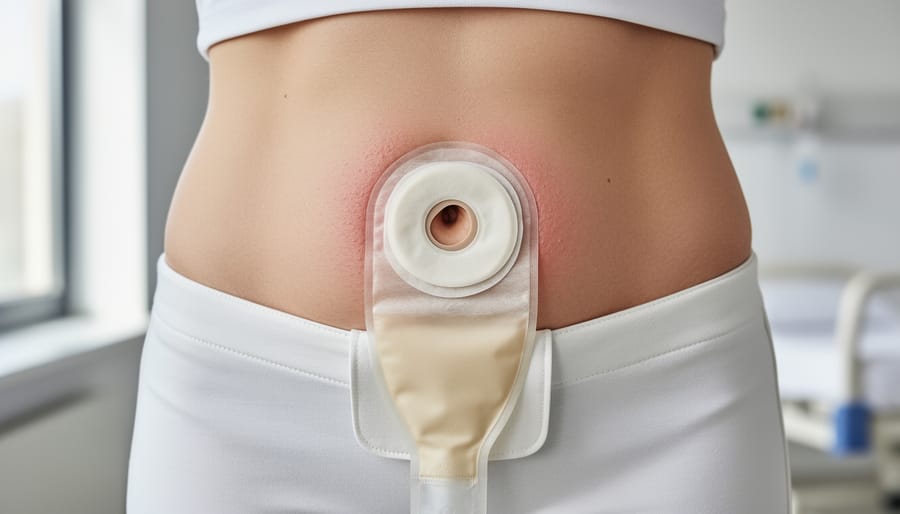
Normal peristomal skin should appear intact, dry, and match the color and texture of surrounding abdominal skin, with no redness, swelling, moisture damage, or visible breakdown at the stoma-skin junction. This baseline finding represents the gold standard for ostomy care and serves as the critical reference point against which all subsequent assessments are measured. Healthcare professionals and ostomy nurses rely on accurate recognition of these normal characteristics to detect subtle changes that may signal complications requiring intervention.
Peristomal skin assessment forms the cornerstone of proactive ostomy management. When the skin barrier adheres properly and appliance placement is correct, the tissue immediately surrounding the stoma remains healthy and resilient. The skin should demonstrate normal elasticity when gently pinched, return to its baseline color within seconds of brief pressure, and show no signs of maceration, erosion, or allergic response to adhesives. Temperature should match adjacent skin, and the patient should report no tenderness, burning, or itching in the peristomal area.
Understanding what constitutes normal allows clinicians to establish individualized baselines for each patient, accounting for variations in skin tone, body contour, and ostomy type. Ileostomy, colostomy, and urostomy sites each present unique assessment considerations, but the fundamental markers of healthy peristomal skin remain consistent across all configurations. Systematic documentation of these normal findings at initial assessment creates a reference framework that enables early detection of complications such as moisture-associated dermatitis, allergic contact dermatitis, or mechanical injury. This proactive approach reduces the risk of severe skin breakdown, decreases healthcare costs associated with treating advanced complications, and significantly improves quality of life for individuals living with ostomies.
Defining Normal Peristomal Skin
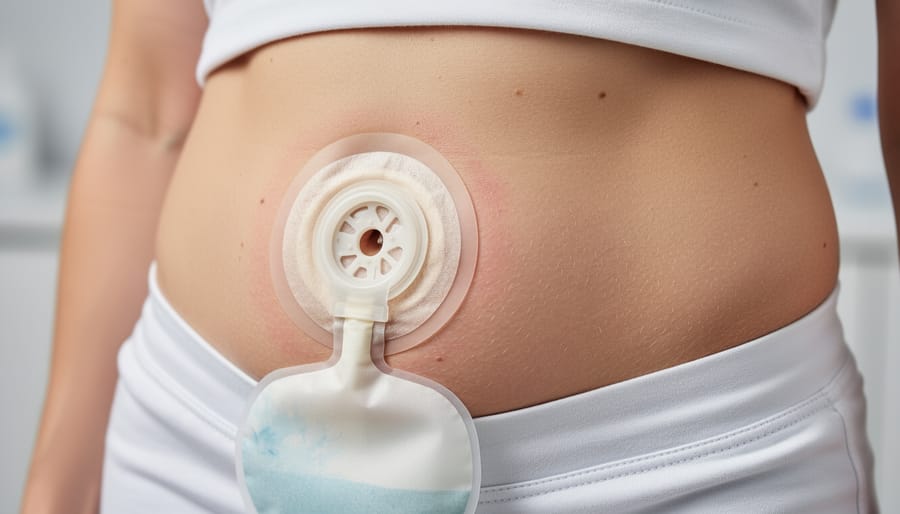
Normal peristomal skin refers to the tissue immediately surrounding the stoma opening, typically extending 5-10 cm from the stoma border depending on the pouching system used. In clinical terms, this skin should mirror the patient’s normal abdominal skin in every measurable aspect, appearance, texture, integrity, and function. Establishing what constitutes normal peristomal skin provides the essential baseline against which all future assessments are compared, enabling early detection of complications before they progress to serious tissue damage.
Healthy peristomal skin maintains the same anatomical characteristics as the surrounding abdomen. The epidermis remains intact without disruption to the skin barrier. The tissue shows no signs of chemical irritation, mechanical trauma, or moisture-related changes. This baseline condition indicates that the pouching system fits properly, effluent is contained effectively, and the skin is protected from exposure to stoma output.
The clinical significance of recognizing normal peristomal skin cannot be overstated. Most peristomal skin complications develop gradually, beginning with subtle changes that may go unnoticed without a clear understanding of baseline normal findings. When healthcare professionals can confidently identify what healthy peristomal skin looks like, they can intervene at the first sign of deviation, whether that’s early erythema, moisture accumulation, or texture changes.
Understanding normal peristomal skin also guides patient education. Teaching ostomy patients to recognize and maintain normal skin characteristics empowers them to participate actively in their care and seek help when changes occur. This shared understanding between clinician and patient creates a foundation for successful long-term ostomy management and prevents the cycle of recurrent skin complications that can significantly impact quality of life.
Visual and Tactile Characteristics of Healthy Peristomal Skin
Color and Pigmentation
In a normal peristomal skin assessment, coloration should match the patient’s natural skin tone on the surrounding abdomen. Normal peristomal skin exhibits color uniformity, appearing neither darker nor lighter than adjacent tissue. This consistency holds across all skin types and ethnicities, from fair skin to deeply pigmented skin, the peristomal area should reflect the individual’s baseline abdominal color.
Healthcare professionals should note the complete absence of erythema (redness), which signals inflammation or irritation. Similarly, blanching, where skin loses color when pressed and doesn’t return to normal tone, indicates compromised circulation and isn’t a normal finding. Pallor, characterized by unusual paleness compared to surrounding tissue, also deviates from healthy baseline.
Normal pigmentation remains stable between assessments. Any discoloration, including purple, gray, or yellow hues, indicates pathology rather than normal findings. Hyperpigmentation or hypopigmentation developing specifically around the stoma represents a change from baseline and warrants further evaluation. During initial assessment, documenting the patient’s specific baseline color provides the reference point for detecting subtle changes during subsequent evaluations.
Skin Integrity and Surface Texture
Normal intact peristomal epidermis displays continuity without visible breaks, erosion, or disruption to the skin’s protective barrier. Upon visual inspection, the epidermis should appear uniformly complete, with no areas of denudement or exposed dermis. The surface remains free from ulceration, open wounds, or raw patches that would indicate barrier compromise.
The texture of healthy peristomal skin mirrors that of the surrounding abdominal tissue, typically smooth or displaying the patient’s baseline skin characteristics. No abnormal scaling, flaking, or roughened patches should be present in the immediate peristomal area. The skin surface remains dry to touch, without weeping, oozing, or moisture accumulation that signals maceration.
Healthy skin demonstrates resilience when gentle pressure is applied during assessment. The absence of crusting, dried exudate, or scabbing confirms proper moisture balance and intact barrier function. The epidermis should not appear papery, thinned, or fragile, which would suggest chronic irritation or repeated trauma. This baseline texture consistency enables clinicians to detect subtle changes during subsequent assessments that may indicate early appliance fit issues or chemical irritation.
Moisture Balance
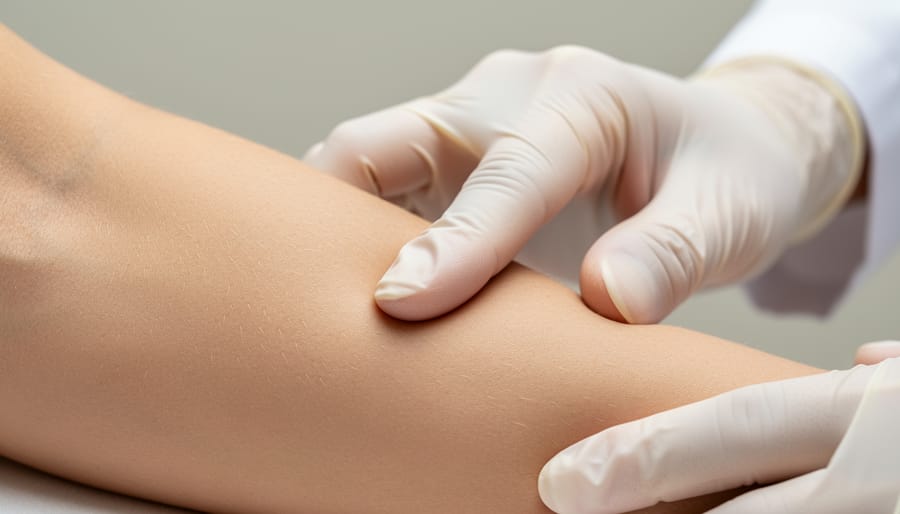
Normal peristomal skin maintains an appropriate moisture level that matches the surrounding abdominal tissue, neither excessively dry nor overly moist. The skin should feel comfortable to touch, with no evidence of excessive perspiration, dampness, or moisture accumulation beneath the pouching system. Healthcare professionals should observe skin that retains its natural protective barrier function, appearing neither shiny from excess moisture nor flaky from dehydration.
Critically, normal findings include complete absence of maceration, which appears as whitened, waterlogged tissue with a wrinkled or softened texture. The epidermis should show no signs of moisture-related breakdown, including no weeping, no sticky or tacky surface, and no moisture trapped in skin folds around the stoma. The skin immediately adjacent to the stoma should remain dry between appliance changes, indicating proper pouching system fit and adequate wear time.
When assessing moisture balance, palpate gently to confirm the skin feels neither clammy nor papery-dry. Normal findings demonstrate that the pouching system effectively protects skin from ostomy output while allowing appropriate air circulation and moisture vapor transmission through the barrier material.
Temperature and Sensitivity
Normal peristomal skin should feel the same temperature as the surrounding abdominal tissue when palpated with the back of your hand or fingertips. The absence of temperature variation is a key indicator of healthy tissue perfusion and the lack of underlying inflammation or infection. Any localized warmth may suggest inflammation, infection, or friction-related irritation, while coolness can indicate compromised blood flow or ischemia.
During routine assessment and appliance changes, patients with healthy peristomal skin should not experience tenderness, burning sensations, or itching. The skin should tolerate gentle palpation without discomfort, and adhesive removal should not trigger pain beyond the normal sensation of peeling. Comfort during wear and removal reflects proper skin barrier function and appropriate appliance selection.
Baseline documentation should include the patient’s subjective report of comfort levels during both wear time and appliance changes. Establishing this comfort baseline allows you to detect subtle changes that may precede visible skin breakdown. Patients who consistently report comfort and absence of sensation changes demonstrate effective ostomy management and proper technique.
Normal sensitivity means the peristomal area responds appropriately to touch without heightened reactivity or numbness. The skin should not exhibit allodynia (pain from normally non-painful stimuli) or hypersensitivity to adhesive contact.
Documentation Standards for Normal Findings

Accurate documentation of normal peristomal skin findings creates the baseline against which all future assessments are measured. Clinical records should capture objective, measurable data using standardized terminology that any healthcare provider can interpret and compare over time.
Begin documentation with the assessment date, time, and evaluator’s credentials. Record the stoma type, creation date, and location. Describe peristomal skin condition using precise anatomical terms, noting the assessed area extends from the stoma edge to at least 10 centimeters in all directions or to the pouching system adhesive border, whichever is greater.
For normal findings, document skin color as consistent with patient’s baseline skin tone on adjacent abdominal tissue. Specify absence of erythema, discoloration, blanching, or unusual pigmentation. Record skin integrity as intact without breaks, erosion, maceration, denudement, or ulceration. Note surface texture as smooth or consistent with surrounding abdomen, without scaling, crusting, weeping, or edema.
Document moisture balance as appropriate, with skin neither excessively dry nor macerated. Record temperature as consistent with adjacent tissue, with no localized warmth. Note absence of patient-reported symptoms including tenderness, burning, itching, or pain during palpation or appliance changes.
Measurement parameters for baseline documentation include peristomal skin assessment using validated tools such as the Ostomy Skin Tool or DET® score, which should indicate zero or minimal findings. Record the pouching system in use, including manufacturer, product name, barrier type, and wear time. Document any skin protection products applied.
Photograph the peristomal area when possible, ensuring consistent lighting, distance, and angle for subsequent comparison. Store images in the patient’s medical record with date and assessment findings.
Standardized documentation enables care continuity across providers and facilities. When peristomal skin remains normal across multiple assessments, note this trend explicitly, as sustained normal findings validate current management strategies and confirm effective patient education.
Normal Findings Across Different Ostomy Types
Normal peristomal skin expectations remain fundamentally consistent across all ostomy types. Regardless of whether the stoma is a colostomy, ileostomy, or urostomy, healthy peristomal skin should display the same baseline characteristics: color matching the surrounding abdomen, intact surface without erosion, appropriate moisture balance, and normal temperature. The core assessment parameters do not change based on ostomy classification.
However, understanding the effluent characteristics of each ostomy type helps contextualize normal skin resilience and potential vulnerability patterns. Different output consistency and chemical composition may influence how quickly skin changes develop if the pouching system fails, though the baseline normal finding remains unchanged.
| Ostomy Type | Effluent Characteristics | Normal Skin Assessment Considerations |
|---|---|---|
| Ileostomy | Liquid to semi-liquid, high enzyme content, continuous output | Normal skin should show no irritation despite proximity to caustic effluent; proper seal critical for maintaining baseline |
| Colostomy | Formed to semi-formed stool, less enzymatic activity, intermittent output | Normal findings typically easier to maintain; baseline assessment same despite lower chemical irritation risk |
| Urostomy | Continuous acidic urine output | Normal skin remains intact despite constant moisture exposure; acid-resistant barriers essential but do not alter normal finding criteria |
When documenting normal peristomal skin around an ileostomy, note the achievement is particularly significant given the caustic nature of small bowel output. This context helps subsequent caregivers appreciate that maintaining normal findings requires vigilant pouching system integrity. For colostomies, normal skin may indicate more tolerance for minor seal imperfections, though the documentation standard remains identical. Urostomy assessments should confirm that normal skin persists despite continuous urine exposure, validating the effectiveness of the selected urostomy-specific barrier.
The key principle: document normal findings using the same criteria and terminology regardless of ostomy type, while understanding that different effluent properties create varying levels of challenge in maintaining that normal baseline.
When Normal Findings Indicate Effective Ostomy Care
Consistently normal peristomal skin assessment findings serve as a direct indicator that the current ostomy management approach is working effectively. When skin maintains its baseline integrity, color, and texture across multiple assessments, this validates that the pouching system matches the patient’s specific needs and anatomical characteristics.
Proper pouching system selection plays a fundamental role in preserving skin health. A well-fitted barrier that accommodates stoma size, contour, and output characteristics prevents leakage under the wafer, protects skin from effluent exposure, and distributes adhesive pressure evenly. Normal findings confirm the barrier opening is appropriately sized, typically leaving 1/8 inch clearance around the stoma without excessive exposure of peristomal skin to output.
Appropriate wear time directly correlates with sustained normal findings. Changing the pouching system before adhesive breakdown occurs prevents moisture infiltration and skin trauma from premature seal failure. Most systems perform optimally for three to seven days, though individual factors like output volume, body contours, and activity level influence ideal timing. Normal skin at each change indicates the wear schedule aligns with the system’s actual performance.
Correct application technique, including proper skin preparation, appropriate use of accessories, and adequate seal time before activity, ensures the barrier adheres completely without wrinkles, gaps, or tension points that compromise protection. Patient education reinforces these practices, empowering individuals to recognize what normal looks and feels like and maintain the routines that preserve it. When patients understand the connection between their care techniques and assessment outcomes, they become active partners in preventing complications before they develop.
Common Questions About Peristomal Skin Assessment
Normal peristomal skin assessment raises practical questions for healthcare professionals developing their skills and patients learning self-care routines. Understanding when findings remain within normal parameters versus requiring intervention ensures appropriate monitoring without unnecessary anxiety.
Assessment frequency depends on multiple factors. Newly created stomas require daily inspection during the first two weeks post-surgery as healing progresses and edema resolves. Once the stoma matures and routine pouching patterns establish, assessment occurs with each appliance change, typically every three to seven days for most pouching systems. Patients experiencing any unusual sensations, leakage, or appliance adherence issues should assess immediately regardless of scheduled change dates.
Are slight color variations between peristomal skin and surrounding abdomen normal?
Yes, minor variations matching the patient’s natural skin tone distribution remain normal, particularly across skin folds or areas with different sun exposure. Concern arises when discoloration appears suddenly or shows distinct borders rather than gradual transition.
How does normal peristomal skin differ between new and mature stomas?
Newly created stomas show mild pinkness from surgical manipulation that fades within two weeks. Mature stomas display skin matching the patient’s baseline abdominal tone without residual surgical changes.
When should I escalate assessment findings to an ostomy nurse?
Report any redness extending beyond one centimeter from the appliance edge, skin breakdown of any size, persistent itching or burning, or changes in skin texture. Escalate immediately if symptoms worsen between scheduled assessments.
Can normal peristomal skin feel slightly different from surrounding tissue?
The peristomal area may feel minimally firmer due to repeated appliance application and removal, but this difference should be subtle. Pronounced hardness, induration, or tender areas require evaluation.
Temperature perception occasionally confuses patients. Peristomal skin touched immediately after appliance removal might feel slightly cooler than surrounding tissue due to reduced air exposure under the barrier, but this normalizes within minutes. Persistent coolness or warmth compared to adjacent skin warrants assessment for circulatory or inflammatory changes.
Texture expectations shift with body location and individual variation. Patients with naturally dry skin across their abdomen expect similar characteristics peristomally. Those with oilier complexions see that pattern continue around the stoma. The key marker is consistency with the patient’s baseline rather than comparison to standardized descriptions that may not reflect individual variation.